
Quiet luxury made restraint the look. Now fashion is making room for something louder, more expressive and much more personal.
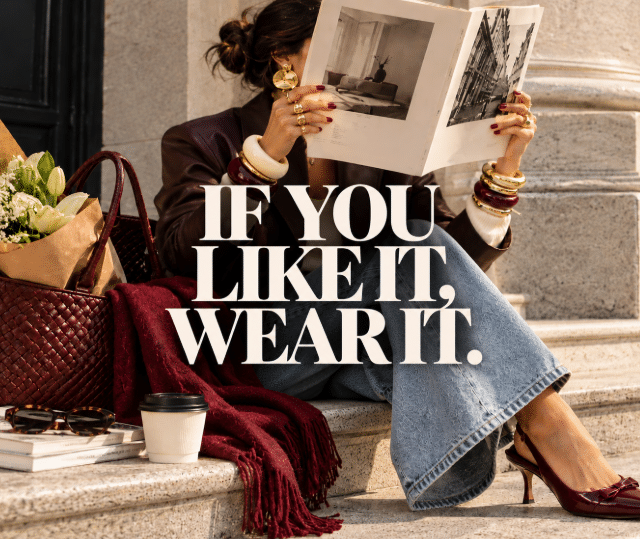
For a while, fashion seemed to agree on one thing: less was more.
Quiet tailoring. Muted colours. Discreet logos. Clothes designed to look expensive without explaining why.
But fashion rarely stays in one place for long.
Now, something else is entering the frame.
Quiet luxury made restraint aspirational.
For a while, the easiest way to look contemporary was to look understated. Clean tailoring, neutral palettes, discreet logos and pieces that suggested quality without needing to announce it.
It was a reaction to the constant cycle of micro-trends. Instead of chasing every new aesthetic, fashion began looking for pieces that could stay relevant beyond a season.
But when one visual language becomes dominant for long enough, something else starts to feel exciting.
More.
Colour is becoming harder to ignore.
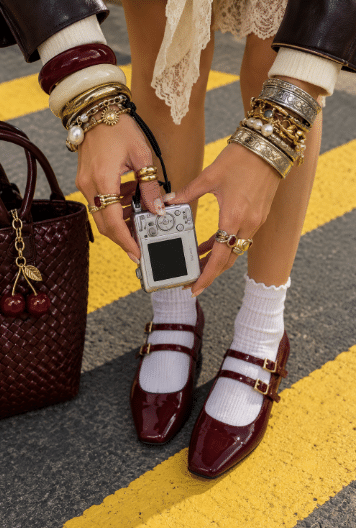
Prints are getting bolder. Jewellery is becoming part of the outfit rather than an afterthought. Silhouettes are getting exaggerated. Texture is becoming more visible.
The shift can be small.
A statement shoe with a simple outfit.
An oversized brooch on a tailored jacket.
A dramatic sleeve.
A scarf tied in an unexpected way.
You don’t necessarily need to wear everything at once.
Sometimes, one extraordinary piece is enough to change the entire look.
The shift is visible on the runway too.
Dior’s Fall/Winter 2026 collection under Jonathan Anderson played with flower-shaped dresses, water-lily-inspired heels, ruffles, feathers and sequined denim.
The details weren’t simply there to decorate the clothes.
They became part of the clothes’ identity.
And that’s perhaps what makes the current movement interesting.
Fashion isn’t only asking what looks expensive anymore.
It’s asking what looks interesting.
There is an interesting question here for India.
Because colour, ornament, embroidery, jewellery, print and layering aren’t new ideas here.
They are already part of the visual language of Indian dress.
From embroidered textiles and elaborate jewellery to the combination of colour, pattern and craft, Indian fashion has always understood the power of more.
What is changing is the way these elements are being interpreted.
Contemporary Indian designers are taking familiar techniques, textiles and forms and placing them into newer silhouettes and contexts.
So perhaps the question isn’t whether maximalism is coming to India.
Perhaps it’s:
Why is the rest of fashion becoming more comfortable with something India has understood for a very long time?
Quiet luxury made restraint aspirational.
The appeal was partly in knowing that you didn’t need to show everyone what you were wearing.
But the next shift may be making expression aspirational.
The goal isn’t necessarily to look richer.
It is to look more like yourself.
An oversized necklace with a simple shirt.
A vintage jacket with contemporary trousers.
Indian jewellery with a Western silhouette.
A bright shoe against an otherwise neutral wardrobe.
The interesting part is the combination.
The outfit doesn’t necessarily need to belong to one aesthetic anymore. It can belong to the person wearing it.
This is why calling it simply a “return of maximalism” doesn’t quite tell the whole story.
The new version isn’t necessarily about excess.
It’s about choice.
One extraordinary shoe.
An unusual print.
A dramatic pair of earrings.
A vintage piece that doesn’t quite match anything else.
You can still love minimalism and wear something maximalist.
You can still appreciate quiet tailoring and want a little drama.
The two aren’t necessarily opposites anymore.
They’re options.
Fashion likes to tell stories in opposites.
Minimalism versus maximalism.
Quiet luxury versus loud luxury.
Old versus new.
But people rarely dress that way.
They mix.
They reinterpret.
They keep what works and add something new.
That’s why quiet luxury doesn’t suddenly become irrelevant because maximalism is becoming more visible.
The neutral blazer isn’t going anywhere.
The simple trouser isn’t going anywhere either.
The difference is that these pieces are increasingly being given permission to sit beside something unexpected.
A plain suit can carry a statement scarf.
A simple dress can become dramatic through jewellery.
A neutral wardrobe can have one very loud piece.
The trend is no longer necessarily the whole outfit.
Sometimes, it’s just the edit.
Trends rarely arrive as clean breaks.
One aesthetic doesn’t disappear overnight so another can take its place.
Instead, the visual language expands.
Quiet luxury made restraint feel desirable.
Now, fashion is making expression feel desirable too.
And perhaps that’s the more interesting shift.
People may be becoming less interested in looking universally right — and more interested in looking distinctly themselves.
Minimalism isn’t over. Maximalism isn’t taking over.
Fashion is simply making room for more ways to be seen.
THE SHIFT · TREND FORECASTING
As algorithms, creators and niche communities reshape the internet, everyone is increasingly living inside a slightly different version of it.

There was a time when the internet felt like a shared space. Everyone seemed to be looking at the same things — the same websites, viral videos, news stories and social platforms. A trend could travel quickly because millions of people were seeing it at roughly the same time.
Today, that feeling is changing. Open Instagram and your feed is shaped around what you have watched, liked and searched for. Open YouTube and the recommendations are built around your viewing history. Spend enough time online and the internet begins to feel less like one shared place and more like a collection of personalised worlds.
The internet is becoming more personal.
Two people can open the same platform and experience completely different versions of it. One person might see fashion, beauty and travel, while another sees football, finance and gaming. Someone else might spend most of their online life inside creator communities, niche forums or group chats.
The platform is the same. The culture isn’t.
Algorithms have made this possible by continuously learning what keeps our attention. But algorithms aren’t the only reason the internet is becoming fragmented. People are also choosing smaller communities, finding creators they trust, joining niche groups and spending more time in spaces where everyone seems to understand the reference.
The internet is no longer just about reaching the largest possible audience. It is increasingly about finding your audience.
This has created something interesting for brands. Culture used to move from the mainstream outward. A major trend would appear in fashion, music, television or advertising, and millions of people would eventually encounter it.
Now, culture can move in the opposite direction.
A small community can create a reference that suddenly spreads. A creator can introduce an idea to a highly specific audience. A niche fashion aesthetic can become a global trend. A local-language meme can travel far beyond the people who created it. A conversation inside a group chat can influence what people eventually see everywhere else.
These smaller cultural pockets are becoming increasingly important because people don’t necessarily want to belong to everything. They want to belong to something that feels like theirs.
Creators have also changed how people discover information. Instead of going directly to a brand, publication or search engine, consumers increasingly encounter ideas through people they already follow.
A creator becomes a filter. They decide what is interesting enough to share, what is worth trying and what deserves attention.
That creates a different kind of trust. The creator doesn’t necessarily need the biggest audience. They need the right audience.
A person with 50,000 highly engaged followers can sometimes have more cultural influence within a specific community than a celebrity with millions of followers who have little connection to the subject.
For brands, that changes the question. It is no longer simply “How many people can we reach?” It becomes “Which people are we actually becoming relevant to?”
For a long time, being relevant meant being visible to as many people as possible. But personalisation makes that harder.
A campaign might be everywhere and still feel irrelevant to someone. A brand can dominate one person’s feed while barely existing in another person’s version of the internet.
This creates a strange challenge. Brands need to become more culturally specific without becoming so niche that nobody remembers them. They need to speak differently to different communities while still feeling like the same brand.
That balance is becoming increasingly important.
The answer probably isn’t to create a completely different identity for every audience. That can make a brand feel inconsistent.
Instead, brands may need to become better at context.
The same brand can enter different communities through different conversations. Its tone might shift slightly. The reference might change. The creator might change. The format might change. But the underlying idea of the brand remains recognisable.
Think of it as having one identity with multiple ways of expressing it.
The strongest brands may be the ones that can move between cultural worlds without losing themselves.
There is an irony here. The internet was supposed to connect everyone. And in many ways, it still does.
But the experience of being online is becoming increasingly individual. Your recommendations are different. Your communities are different. Your creators are different. Your references are different. Your version of culture can look completely different from someone else’s.
That doesn’t necessarily mean the internet is becoming less powerful. It may simply mean that influence is becoming more distributed.
Instead of one massive cultural conversation, we now have thousands of smaller ones happening at the same time. And occasionally, one of them breaks through.
For brands, this means listening becomes just as important as broadcasting.
The most useful cultural signals may not always come from the biggest trends. They might come from a small community discussing something intensely, a creator repeatedly talking about a niche problem, a comment section developing its own language, or a group of consumers turning a product into something the brand never expected.
These are small signals, but small signals can become large movements.
The challenge is knowing which ones are worth following.
The internet isn’t becoming less connected. It’s becoming more personal.
That changes how people discover products, ideas, brands and each other. For brands, the goal shouldn’t be to force themselves into every corner of the internet. It should be to understand the worlds their audiences already inhabit — and enter those worlds without losing their own identity.
Because the future of digital culture may not belong to the brands that speak the loudest. It may belong to the ones that understand where people are actually listening.
We used to share the same internet. Now, we each have our own version of it — different feeds, different communities, different references and different ways of seeing the world.
For brands, the challenge isn’t to become part of every one of them. It’s to enter different worlds without losing the thing that makes them recognisable in the first place.
The internet may keep getting more personal. The brands that survive it may be the ones that know exactly who they are.
Studio Origin explores the ideas shaping brands, culture, and what’s next. We connect consumer thinking with creative strategy to understand the world around us.