

THE SIGNAL
You Didn't Mean to Shop. You Just Started Scrolling.
How discovery became part of the shopping journey.


FEATURED ARTICLE
You Didn’t Mean to Shop. You Just Started Scrolling.
You’re tired after work. You open Instagram for a break.
A few scrolls later, you’re looking at a café you’ve never heard of, a jacket you weren’t searching for, or a product you suddenly want to know more about.
You didn’t open your phone intending to shop.
But somehow, you started browsing.
And that shift is changing the way brands are discovered.
READ MORE →
How discovery became part of the shopping journey. You’re tired after work. You open Instagram for a break.
A few scrolls later, you’re looking at a café you’ve never heard of, a jacket you weren’t searching for, or a product you suddenly want to know more about.
You didn’t open your phone intending to shop.
But somehow, you started browsing.
And that shift is changing the way brands are discovered.
From Search to Discovery
There was a time when shopping began with intention.
You needed something, searched for it, compared your options and eventually bought it.
Need → Search → Compare → Buy
Now, discovery can happen before intention.
A Reel introduces a product. A creator makes you curious. A friend’s story puts a café on your radar. A recommendation brings something you didn’t know you wanted into view.
Sometimes, it isn’t even the product that catches your attention first. It is the trend, the aesthetic, or a lifestyle you find yourself drawn to.
You see how people are dressing, where they’re going, what they’re using, how they’re decorating their spaces — and somewhere along the way, you discover the products that let you become part of it.
Scroll → Discover → Consider → Buy
The difference isn’t that search has disappeared.
It’s that discovery has become part of the shopping journey itself.
And sometimes, you discover the lifestyle first and the product second.
The Feed Became the Storefront
The interesting part is that this doesn’t always feel like shopping.
You might be watching a styling video. Saving a restaurant recommendation. Looking at someone’s morning routine. Following a creator because you like their taste.
The product appears somewhere inside that experience.
It doesn’t interrupt the story.
It becomes part of it.
This is one reason short-form video and social platforms have become increasingly important to retail discovery in India. Meta’s 2026 research describes a shift from a search-led shopping journey towards a more scroll-led discovery ecosystem, with Reels, creators, AI recommendations and messaging increasingly connecting discovery with purchase.
The consumer isn’t necessarily thinking:
I am going to find something to buy.
They are thinking:
That’s interesting.
Then:
Where is that from?
Then:
Maybe I should save this.
And eventually:
Okay, I’ll buy it.
The journey can happen almost without announcing itself.
What This Changes for Brands
For years, one of the biggest questions for a brand was:
How do we get people to find us?
Now another question matters just as much:
How do we become relevant enough to be discovered?
That changes the role of marketing.
A brand can no longer think only about the campaign it launches when it has something to sell.
It has to think about what it looks like, sounds like and feels like when someone encounters it casually.
A product photograph.
A creator’s styling video.
A behind-the-scenes moment.
A customer recommendation.
A conversation in the comments.
A trend that the brand participates in.
None of these moments necessarily feels like a traditional advertisement.
But together, they build familiarity.
And familiarity can become consideration.
From Campaigns to Constant Presence
This is where the idea of always-on culture becomes important.
People aren’t waiting for brands to advertise.
They’re already moving through culture — watching, saving, sharing, comparing and talking.
Brands enter that environment rather than controlling it completely.
The strongest presence isn’t always the loudest one.
Sometimes it is simply the brand that keeps appearing in the right places, in the right context, with something worth paying attention to.
That could mean a fashion brand understanding the aesthetic its audience is moving towards.
A beauty brand understanding the routines people are actually discussing.
A café becoming part of a city’s social identity.
Or a product becoming associated with a particular lifestyle before someone ever searches for it.
The goal shifts from being seen to being remembered in context.
The Consumer Is Leaving Signals Everywhere
The other side of this shift is data.
Every interaction can become a signal.
What people watch.
What they skip.
What they save.
What they search.
What they return to.
What they share with a friend.
What they eventually buy.
AI and recommendation systems can connect many of these signals and help brands understand what audiences are responding to. But data alone doesn’t always explain the cultural reason behind a behaviour.
Consumer data can tell a brand what happened. Culture can help explain why.
A sudden interest in a particular colour might not just be about colour.
It could be connected to a broader aesthetic.
A product category growing quickly might reflect a change in lifestyle.
A particular format becoming popular might tell us something about how people want to discover information.
The signal is rarely just the number.
It’s what sits behind it.
From Selling Products to Building Worlds
The brands that understand this shift aren’t necessarily trying to turn every interaction into a transaction.
They’re building a world people want to step into.
Think about the difference.
A brand can tell you:
Here is our product. Buy it.
Or it can show you:
Here is a way of living that our product belongs to.
The second creates context.
And context makes discovery feel natural.
This is why the visual language around a brand can matter almost as much as the product itself.
The places it appears.
The people associated with it.
The music.
The photography.
The references.
The conversations.
The little details that make someone think:
This feels like me.
The New Shopping Journey
None of this means that traditional shopping has disappeared.
People still search.
They still compare prices.
They still read reviews.
They still visit stores.
They still ask friends what to buy.
But those behaviours increasingly sit alongside something else:
unplanned discovery.
The journey is no longer always a straight line.
It can begin with a Reel, move to a profile, jump to a website, continue through a WhatsApp conversation and end in a physical store.
Or it can start with a friend’s post and end with a product you never knew existed an hour earlier.
The path keeps changing because the consumer keeps moving between platforms, people and experiences.
So What Is the Signal?
Maybe the biggest change isn’t that people are shopping differently.
It’s that shopping can now begin before people realise they’re shopping.
A scroll becomes curiosity.
Curiosity becomes consideration.
Consideration becomes a search.
And eventually, sometimes, a purchase.
For brands, that means discovery can’t be treated as the first step before the real marketing begins.
Discovery is the marketing.
The question is no longer simply:
How do we get consumers to find us?
It’s:
What will make them stop scrolling when they do?
Because sometimes the consumer isn’t looking for your product.
They’re looking for something that feels interesting, useful, beautiful, relevant or simply worth remembering.
And your product might become part of that discovery.
STUDIO ORIGIN TAKE
The shopping journey used to begin with a need.
Increasingly, it can begin with a feeling.
A look.
A recommendation.
A moment of curiosity.
A lifestyle you suddenly want to know more about.
Brands that understand this don’t just wait for consumers to search for them.
They become part of what consumers are already looking at.
And perhaps that’s the real signal:
You don’t always have to create the intention to buy.
Sometimes, you just have to create something worth discovering.
IDEAS WORTH A SECOND LOOK
THE SIGNAL · CONSUMER TRENDS
Why Everything Is Becoming a Membership
From sports and coffee to beauty, fashion, travel and banking, membership is becoming a way of living. But when everything asks us to subscribe, what are we actually paying for?
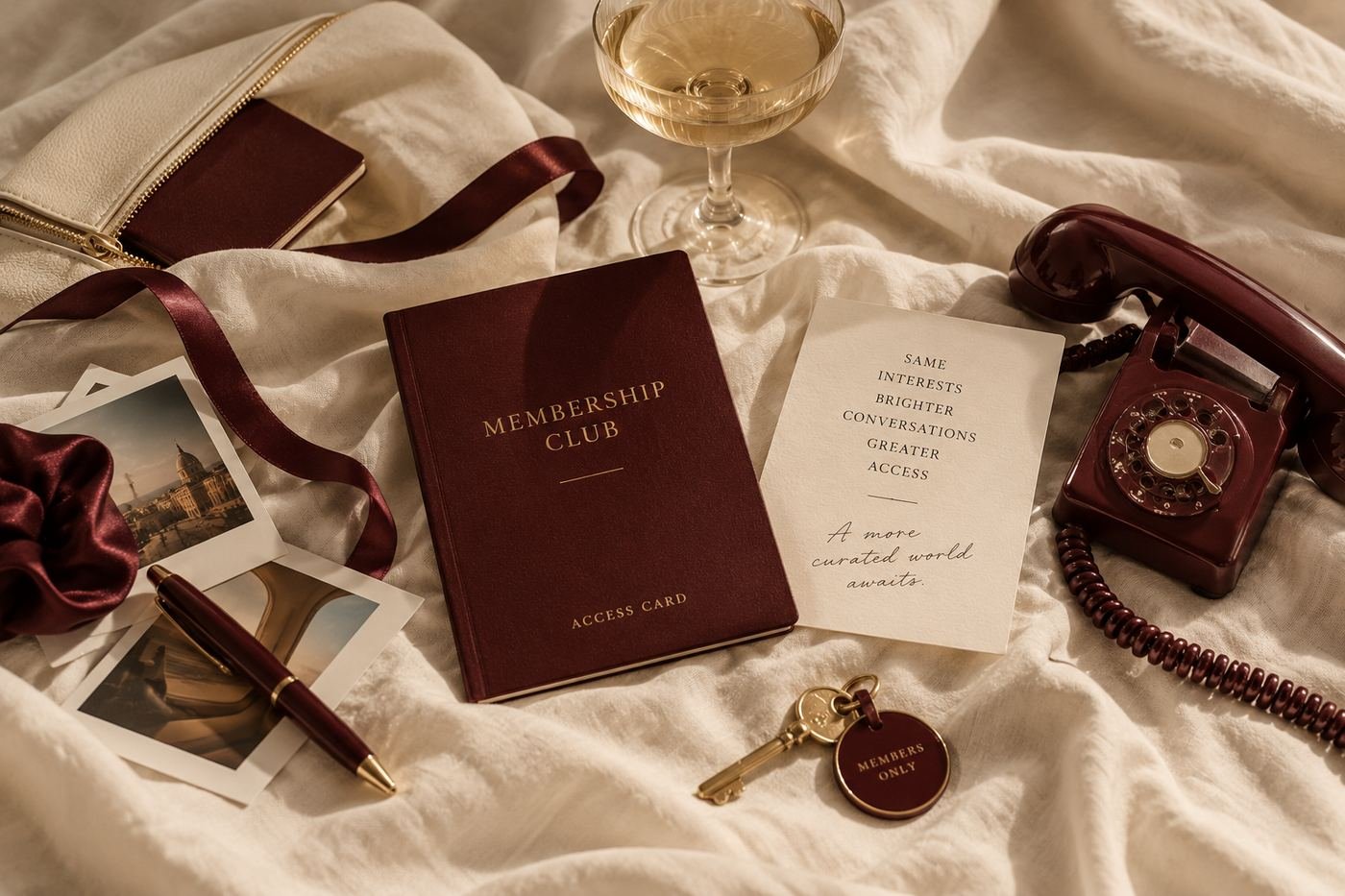
Membership Used to Mean Access
We used to buy things. Now, increasingly, we subscribe to them.
A gym membership. A coffee subscription. A streaming service. A beauty box that arrives every month. An airport lounge you pay to access. A bank account that comes with a set of “premium” benefits.
Membership is no longer limited to gyms and clubs. It is becoming a way brands build relationships with consumers — and a way consumers increasingly structure their everyday lives.
At one point, membership meant belonging to something specific: a gym, a club, a professional organisation. You paid for access, and that access gave you something you couldn’t get otherwise.
But the idea has expanded.
Today, membership can mean convenience, savings, exclusivity, discovery, community or simply the feeling that you are getting a little more than everyone else.
From Purchase to Participation
The traditional transaction had a beginning and an end. You needed something, searched for it and bought it. The relationship between the consumer and the brand could essentially stop there.
Membership changes that.
The relationship doesn’t end at purchase because the purchase isn’t necessarily the point anymore. The brand has a reason to keep showing up.
A fashion platform can offer early access to a collection. A beauty brand can send products every month. A coffee company can make your usual order easier to access. A travel programme can give you upgrades, lounges or personalised experiences.
The product becomes part of a larger relationship.
Instead of simply asking, “What can we sell you?”, the brand starts asking, “What can we give you a reason to come back for?”
Everything Can Become a Membership
Look across categories and the pattern becomes difficult to miss.
Fitness has memberships. Streaming has memberships. Beauty has subscriptions. Fashion has loyalty programmes and member-only access. Travel has tiers, lounges and premium experiences. Coffee has subscriptions. Shopping platforms offer paid programmes built around convenience and benefits.
Even banking increasingly comes with different levels of access and privilege.
The language itself has changed. Customer becomes member. Purchase becomes access. Discount becomes benefit. And the relationship becomes ongoing.
This is important because a customer doesn’t necessarily have to return.
A member is expected to.
The Monthly Lifestyle Bill
But there is another side to this shift.
As more things become memberships, our spending starts to look different. Instead of making one large purchase, we accumulate smaller recurring payments — a streaming service here, a gym membership there, a premium banking account, a delivery subscription, a beauty box or a coffee plan.
Individually, each one can feel manageable.
Together, they become something else: a monthly lifestyle bill.
And this changes the way consumers think about value.
We’re no longer only asking whether something is worth buying. We’re asking whether it is worth continuing.
That distinction matters because cancelling a membership isn’t just deciding not to buy something. It means deciding that the relationship no longer gives us enough reason to stay.
Why Consumers Stay
A successful membership isn’t built around the sign-up. It’s built around what happens after it.
People stay when membership makes something easier. They stay when it saves them money. They stay when it gives them access they genuinely value.
But sometimes, they stay for something less tangible: identity, community and belonging.
Being part of a particular club, platform or community can become part of how people see themselves.
A fitness membership isn’t necessarily just about having access to a gym. A fashion membership isn’t necessarily just about getting a discount. A travel membership isn’t only about airport lounges.
The strongest memberships become woven into everyday behaviour. They become habits.
And once something becomes a habit, leaving it can feel like giving something up.
When Membership Becomes Too Much
But there is a limit.
Consumers are increasingly surrounded by things asking them to subscribe, upgrade or become a member. And when every brand has a membership programme, the word membership itself starts to lose some of its power.
If everything is premium, what does premium actually mean?
If every platform offers exclusive access, how exclusive can access really be?
There is also a growing tension between convenience and commitment. A subscription might make life easier — until there are too many of them.
The problem isn’t necessarily that consumers don’t want memberships. It’s that they don’t want memberships that don’t earn their place.
The Value of Staying
This creates a different challenge for brands.
Getting someone to sign up is only the first step. The real question is: Why should they stay?
A discount can attract someone. Early access can attract someone. A welcome offer can attract someone. But none of these necessarily creates a lasting relationship.
The strongest memberships give consumers something that becomes difficult to replace. Maybe it is convenience. Maybe it is access. Maybe it is discovery. Maybe it is a community.
Or maybe it is simply the feeling that the brand understands what they need before they have to ask.
That is where membership becomes more interesting than a traditional loyalty programme. It isn’t only about rewarding the customer for buying more. It is about creating a reason for the customer to remain part of the ecosystem.
Membership Is Becoming a Lifestyle
Perhaps that is why membership has moved so far beyond gyms and clubs.
People increasingly organise parts of their lives through ongoing relationships with brands. They don’t just buy coffee; they have a coffee routine. They don’t just book travel; they belong to a travel ecosystem. They don’t just shop for clothes; they follow brands, receive early access, collect benefits and become part of communities built around them.
The transaction becomes less important than the relationship around it.
And for brands, that relationship can be incredibly valuable.
Because a one-time purchase tells you what someone bought.
A membership can tell you what they repeatedly choose.
What Brands Need to Earn
But the future of membership won’t belong to brands simply because they can create another subscription.
Consumers are becoming more selective. They will ask what they’re actually getting in return.
Is it saving them time? Is it giving them access? Is it making their experience better? Is it helping them discover something? Does it make them feel part of something?
Or is it simply another monthly payment they might forget about?
The strongest membership models will probably be the ones that answer those questions clearly. They won’t make membership feel like an obligation. They’ll make it feel useful — and eventually, maybe even difficult to imagine life without.
Studio Origin Take
Membership is becoming less about belonging to a club and more about belonging to a lifestyle.
That is why the idea is spreading across categories so quickly. Brands aren’t only selling products anymore. They’re selling access, convenience, continuity and identity.
But as membership becomes more common, consumers will become more selective about what deserves a place in their monthly lives.
The brands that win won’t necessarily be the ones offering the most benefits.
They’ll be the ones that understand why people want to stay.
Because the real value of membership isn’t getting someone to join.
It’s giving them a reason not to leave.
Maybe the question isn’t whether membership is the future. It’s whether every part of our lives needs to become one.